
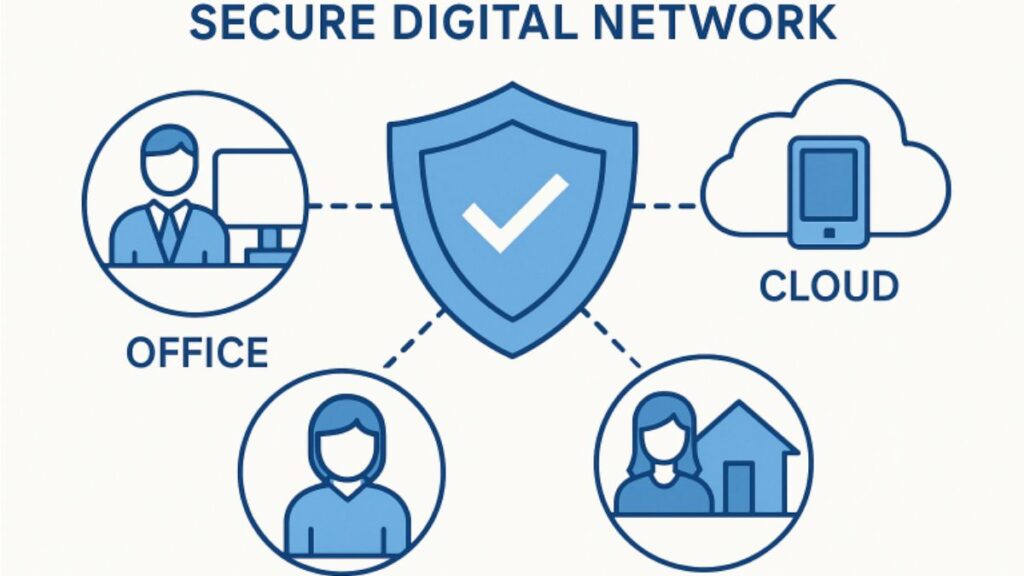
In today’s hybrid and cloud-driven business environment, security and connectivity challenges are shaping IT strategies worldwide. Enterprises are adopting Secure Access Service Edge (SASE) to unify networking and security into a single, cloud-delivered service, dramatically streamlining how companies enable secure remote access for their employees. For organizations evaluating next-generation solutions, a trusted MetTel SASE vendor brings the necessary expertise to implement scalable, resilient SASE architectures tailored to unique operational needs.
SASE adoption redefines security by creating a flexible perimeter at the user and device level, enhancing control, visibility, and user experiences across various environments. As digital transformation accelerates, SASE integrates connectivity and cybersecurity into a unified framework, enabling organizations to manage productivity and risk effectively. This article examines the fundamental concepts, implementation strategies, and opportunities for transitioning from legacy security systems to agile, cloud-native solutions that support modern work environments.
Core Components of SASE
SASE’s value stems from its ability to unify networking and security into a single, cloud-delivered framework. By combining multiple security and connectivity functions, SASE simplifies IT operations while improving overall protection and performance. The foundation of SASE lies in several core components:
Software-Defined Wide Area Networking (SD-WAN): SD-WAN intelligently manages traffic across multiple connections—including MPLS, broadband, and LTE—to optimize performance and ensure reliable application delivery. By monitoring network conditions in real time, SD-WAN can dynamically reroute traffic to prevent congestion, reduce latency, and maintain uptime even when links fail. This capability is particularly vital for organizations with geographically distributed offices and cloud-dependent applications, providing consistent performance regardless of location.
Secure Web Gateway (SWG): SWGs act as a frontline defense against web-based threats. They inspect web traffic in real time, blocking malicious URLs, phishing attempts, and malware while enforcing company policies on acceptable use. By integrating policy-driven controls and advanced threat intelligence, SWGs not only protect users but also ensure compliance with regulations such as GDPR or HIPAA. The result is a safer browsing experience for employees without slowing down legitimate business operations.
Cloud Access Security Broker (CASB): CASBs offer visibility and control over cloud application usage. They monitor user activity, detect risky behavior, enforce data security policies, and prevent unauthorized access to sensitive information. CASBs bridge the gap between traditional on-premises security controls and the cloud, allowing organizations to maintain compliance and data protection as they adopt SaaS, PaaS, or IaaS services. This ensures that sensitive corporate data remains secure, even as cloud adoption continues to grow.
Zero Trust Network Access (ZTNA): ZTNA implements a strict “never trust, always verify” approach to access. Every user, device, and application request is authenticated and authorized before access is granted, often using context-aware policies such as location, device health, and user role. By enforcing least-privilege access, ZTNA minimizes the risk of lateral movement by attackers and ensures that sensitive resources are only accessible to verified entities.
Firewall as a Service (FWaaS): FWaaS delivers traditional firewall capabilities—including traffic filtering, intrusion prevention, and policy enforcement—from the cloud. This eliminates the need for complex on-site appliances while providing centralized management for distributed environments. Organizations can enforce consistent security rules across all locations, including remote users, without sacrificing performance or visibility.
By converging these components into a unified platform, SASE reduces complexity and provides holistic visibility into network and security activities. IT teams can deploy protections quickly, respond to emerging threats in real time, and maintain consistent policies across an increasingly distributed workforce. Forward-thinking enterprises are embracing SASE as a core strategy for modern digital transformation initiatives.
SASE and the Hybrid Workforce
The rise of remote and hybrid work models has fundamentally changed how employees interact with business resources. Rather than working solely from a central office, staff now access applications and data from multiple locations, including their homes, co-working spaces, or while on the road. This shift has dramatically increased reliance on cloud applications, virtual desktops, and remote access solutions.
SASE addresses these challenges by delivering secure, policy-driven access regardless of user location. It ensures that every connection—from laptops at home to mobile devices on public networks—is verified and protected against threats. By centralizing visibility and control, IT teams can enforce consistent policies, detect anomalies, and mitigate risks without disrupting employee productivity. Furthermore, SASE reduces latency by directing traffic through the most efficient paths, improving the user experience for cloud applications, video conferencing, and collaboration tools.
According to a recent report by Hughes Network Systems, nearly half of organizations cite remote work as a primary driver for adopting SASE. Beyond security, SASE enables operational agility, allowing businesses to quickly support new remote employees or expand hybrid work models without compromising network performance or protection.
Implementing SASE in Your Organization
Successfully adopting SASE requires careful planning and coordination across technology, people, and processes. A structured approach ensures minimal disruption while maximizing the benefits of the platform.
Assess Current Infrastructure: Begin by evaluating existing network and security architectures. Identify gaps, bottlenecks, and vulnerabilities that SASE can address. Understanding current usage patterns and business priorities helps prioritize which components should be implemented first.
Define Security Policies: Clear, enforceable policies are essential for protecting sensitive data and ensuring regulatory compliance. Policies should be based on user roles, device types, locations, and application access requirements, incorporating both network security and endpoint controls.
Select an Expert SASE Vendor: Choose a provider with a proven, mature SASE platform and experience integrating distributed environments. Evaluate the vendor’s roadmap, support offerings, and ability to scale with your organization. A strong partner can provide guidance, training, and best practices for deployment.
Map Integration Steps: A phased rollout minimizes operational disruption. Start with critical locations or user groups and expand gradually. Map dependencies between legacy systems and new SASE components to avoid conflicts, and ensure monitoring tools are in place to track performance.
Continuous Monitoring and Optimization: Deploy analytics and monitoring tools to measure system performance, detect anomalies, and optimize policies. SASE is not a “set-and-forget” solution; ongoing refinement ensures maximum security, efficiency, and user satisfaction.
Engaging both internal teams and external stakeholders early in the process is critical. Communication, training, and documentation prepare staff for changes in workflows and establish expectations for network and security operations.
Benefits of SASE Adoption
Organizations that embrace SASE enjoy a combination of security, performance, and operational advantages.
Comprehensive Security: By integrating SD-WAN, SWG, CASB, ZTNA, and FWaaS, SASE reduces gaps and inconsistencies inherent in fragmented legacy systems. Centralized policy enforcement and real-time threat intelligence enhance protection against cyberattacks, data breaches, and insider threats.
Superior Performance: SASE intelligently routes traffic based on network conditions, user location, and application type, minimizing latency and enhancing productivity. Remote and branch offices gain optimized access to cloud services, while mobile users experience smoother and faster connections.
Seamless Scalability: Whether onboarding new employees, expanding to additional sites, or adopting new cloud applications, SASE allows organizations to extend secure access without deploying complex on-premises appliances. This flexibility supports growth and evolving business needs.
Cost Savings: Consolidating networking and security functions into a single cloud-delivered platform reduces hardware investments, maintenance costs, and administrative overhead. Over time, organizations achieve a stronger return on investment by simplifying operations and reducing security incidents.
Challenges and Considerations
While SASE offers significant benefits, implementation requires careful attention to potential obstacles.
Integration Complexity: Transitioning from legacy networks and security solutions involves orchestrating multiple systems, workflows, and personnel. Dependencies must be mapped, and overlapping policies reconciled to prevent gaps or conflicts during migration.
Skills Gap: Teams may need new expertise to manage cloud-based security, SD-WAN optimization, and zero-trust access. Vendors offering comprehensive training, certification programs, and ongoing support can help bridge these gaps.
Vendor Evaluation: Not all SASE solutions are equal. Evaluate offerings for breadth of features, reliability, roadmap transparency, and service-level commitments. Selecting a partner aligned with your long-term strategy is critical to achieving mature SASE adoption.
By addressing integration challenges, investing in training, and carefully selecting a vendor, organizations can unlock the full potential of SASE while minimizing risk.
Future Trends in SASE
The SASE landscape is evolving rapidly, driven by emerging technologies and changing workforce dynamics.
Enhanced AI and Machine Learning: Next-generation SASE platforms leverage AI to detect anomalies, predict threats, and automate response actions. By reducing mean time to detect (MTTD) and mean time to respond (MTTR), AI enhances security effectiveness while reducing the burden on IT teams.
Deeper Zero Trust Integration: Future SASE implementations will extend zero-trust principles to every user, device, and resource. Context-aware access controls, continuous authentication, and dynamic policy enforcement will further minimize risk, even in highly distributed environments.
Improved User Experience: Modern SASE solutions focus on frictionless access, reliable performance, and low latency. This is particularly important for hybrid and mobile-first teams, where productivity depends on uninterrupted access to cloud applications and collaboration tools.
As SASE matures, organizations can expect more automated, intelligent, and adaptive security mechanisms. These advancements will help enterprises respond to ever-changing threats while supporting growth, agility, and a seamless user experience.
Conclusion
As the demands on the digital workplace continue to increase, so too must the sophistication of the systems that support them. SASE offers a future-ready solution that unifies security and networking, enabling organizations to thrive in a landscape where flexibility, security, and relentless digital innovation are the new norm. With deliberate implementation, strong partnerships, and ongoing optimization, SASE enables the digital enterprise to outpace threats and empower the workforce—wherever business happens.