
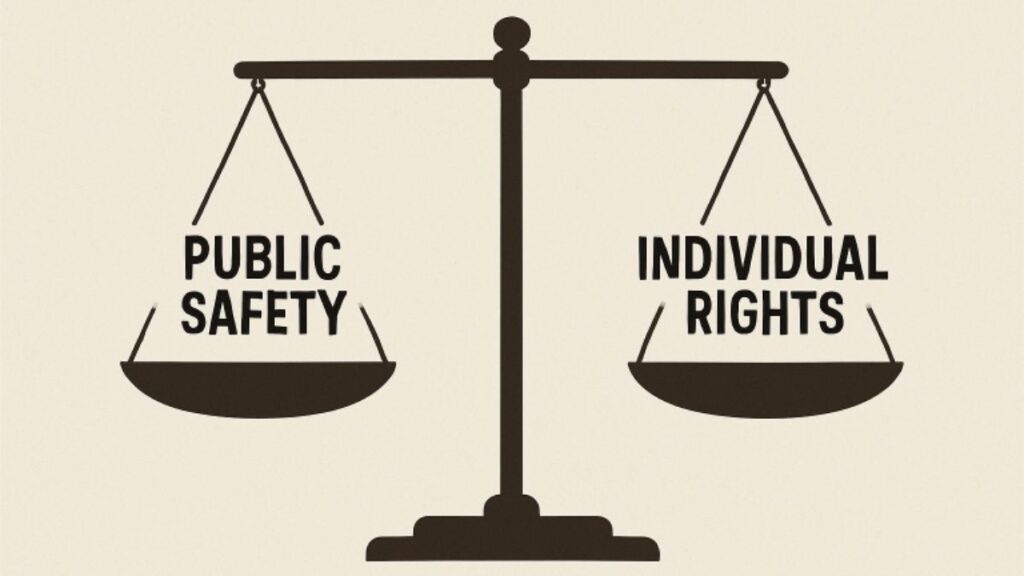
The criminal justice system serves a dual purpose: upholding public order and protecting individual rights. This balance can be especially important when someone faces criminal charges. Individuals navigating the system often benefit from consulting a criminal defense attorney to fully understand their rights and legal options from the earliest stages of the process.
Because the justice system affects both accused individuals and the broader community, achieving a balance between enforcement and rights is a recurring challenge. Recent events and legislative reforms across the United States show that this conversation is ongoing, and that both legal professionals and the public play essential roles in shaping fair outcomes for everyone involved.
While focus often falls on prosecution and sentencing, there are also numerous preventative, rehabilitative, and restorative aspects that support fairness and address broader concerns about equity. Whether through reforms, court decisions, or community involvement, the system continuously adapts to reflect society’s evolving sense of justice.
The Role of Law Enforcement and Individual Rights
Law enforcement agencies are charged with upholding laws and ensuring public safety. At the same time, officers must respect constitutional rights regarding search and seizure, due process, and protection against self-incrimination. Access to professional legal services can help individuals understand these rights and navigate interactions with the justice system. This dual responsibility lies at the heart of public trust in policing and is reinforced through clear standards, continuous training, and court oversight. Any overreach or perceived lack of transparency can quickly erode faith in the justice system, underscoring the importance of accountability measures.
Legislative Reforms Addressing Systemic Disparities
In recent years, lawmakers in several states have sought reforms targeting economic and racial disparities. One significant example is Illinois’s Pretrial Fairness Act, which eradicated cash bail and encourages risk-based assessments over monetary considerations. This legislative step aims to ensure that the right to pretrial freedom is not tied to financial status, representing a shift in how courts manage pretrial detention. In the absence of such equitable approaches, marginalized communities can be disproportionately impacted by systemic barriers.
The Importance of Public Defenders
Ensuring effective legal representation is central to due process in every criminal proceeding. Public defenders represent individuals who cannot afford to hire private counsel. The ongoing shortage of public defenders in some states has created significant challenges, including high caseloads and the occasional inability to provide representation at critical junctures. These shortcomings highlight the broader need for investment in our constitutional guarantee of counsel for all, regardless of socioeconomic status. When resources are insufficient, the risks of wrongful convictions, public safety issues, and undermined credibility become much greater.
Juvenile Justice and Accountability
Specialized approaches are necessary when handling juvenile cases. Policy changes in Maryland, for example, have focused on increasing oversight and collaboration between agencies that work with young offenders. The aim is to provide services and interventions that both address harmful behavior and support future prospects for at-risk youth. Maintaining a balance between accountability and rehabilitation is especially important in juvenile justice, where the goal is to help young people become responsible adults rather than permanently stigmatizing them for early mistakes.
Community Involvement in Justice Reform
Effective justice reform is rarely accomplished by lawmakers and professionals alone. Community advocacy groups, nonprofit organizations, and ordinary citizens have significant influence over public opinion, legislative priorities, and reform initiatives. Groups like Right On Crime, for instance, focus on evidence-based strategies to reduce recidivism, encourage victim restoration, and improve offender rehabilitation. By actively participating in the reform process, communities help ensure that changes align with real-world needs and values.
Challenges in Achieving Balance
Despite ongoing efforts, significant challenges endure in the push for balance and fairness. Deep-rooted disparities, whether rooted in race, economic status, or geography, continue to affect outcomes in areas like sentencing and recidivism. A recent study highlighted that neither technology nor algorithms alone can address the societal influences that shape recidivism rates. Policymakers must take into account social determinants and broader community needs when crafting sustainable solutions.
Final Thoughts
Balancing the competing aims of enforcement and individual protections is a dynamic process involving law enforcement, lawmakers, courts, and the community. By focusing on reforms that address systemic disparities, expanding access to competent legal representation, and involving all stakeholders, especially those most impacted by the system—society moves closer to an equitable, reliable, and trusted system of justice for everyone.