Beneath the Earth’s surface lies groundwater, a vital lifeline that supplies nearly half of all drinking water around the world. It sustains agricultural productivity and underpins economic activities in countless communities. Safeguarding this resource is increasingly urgent in the face of over-extraction, pollution, and changing climate patterns. Informed and science-based methods for Hydrogeology can help society understand both risks and solutions.
Recent decades have seen mounting stress on aquifers, driven by population growth and industrial demands. Balancing the need for groundwater with its natural replenishment is a critical challenge. This responsibility extends beyond scientists and policymakers to farmers, businesses, and communities that depend on this invisible resource every day.
As groundwater becomes increasingly scarce in areas of high demand or prolonged drought, new technologies and best practices are emerging to monitor usage and promote recharge. Public education campaigns and innovative management approaches are gaining prominence, highlighting the need for collective action.
Responsible management starts with quality data collection and in-depth field analysis. Proper Site Characterization is key to understanding aquifer dynamics and setting effective policy and management strategies tailored to the unique conditions of each region.
The Importance of Groundwater
Groundwater serves as a critical source of drinking water for billions and is integral to food production and industrial use. Despite its quiet presence beneath our feet, it remains central to community resilience and economic development. Ensuring the sustainability of this resource is essential for population health, agricultural stability, and long-term security.
As aquifer levels decline or water quality deteriorates, the impacts can be profound, including diminished food supplies, loss of livelihoods, and costly water shortages. Recognition of groundwater’s value must lead to concerted action among rural and urban stakeholders alike.
Challenges to Groundwater Sustainability
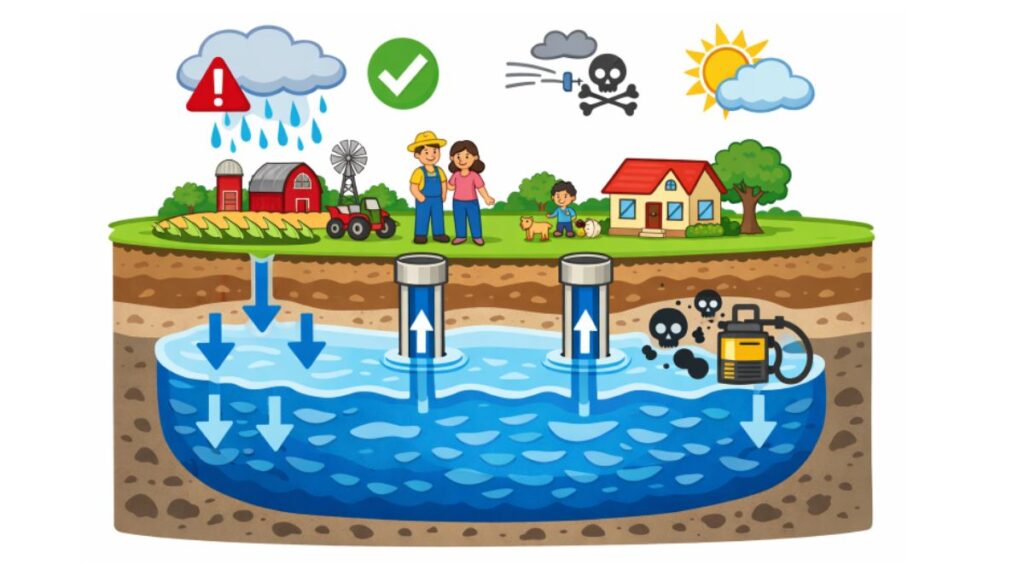
- Over-Extraction: Aquifers are at risk when water withdrawals exceed the rate at which natural processes replenish them. Persistent over-extraction drives water tables lower, causes land subsidence, and hampers sustainability.
- Contamination: Fertilizers, pesticides, and industrial chemicals can seep into groundwater. Such pollution from surface activities is difficult to remediate and can render aquifers unusable for years.
- Climate Change: Shifts in precipitation, longer droughts, and increased evaporation rates threaten groundwater recharge. The unpredictable nature of climate change complicates management efforts and demands adaptive policies.
Effective Groundwater Management Strategies
Balancing Extraction with Recharge
At the heart of sustainable use is balancing withdrawals with natural and engineered recharge. Managed aquifer recharge projects, such as California’s efforts to replenish groundwater using stormwater, showcase strategic planning. Integrating new recharge basins and restoring floodplains can boost aquifer recovery and support water reliability.
In other parts of the world, managed recharge is also showing promise. For example, in parts of India, centuries-old stepwells and recharge ponds are being restored as community-based recharge solutions, blending traditional wisdom with modern hydrogeological knowledge. These projects illustrate that both large-scale infrastructure and grassroots initiatives have vital roles in maintaining groundwater balance, especially where resources are shared among multiple jurisdictions.
Preventing Contamination
Reducing pollutants at the source is essential for maintaining water quality. This means promoting safer agricultural practices, tightening regulation of hazardous waste, and investing in monitoring systems. Building public awareness around contamination risks is a fundamental step in prevention.
Moreover, ongoing technological advancements are enabling faster and more precise detection of contaminants, allowing authorities to act swiftly and minimize public health risks. Partnerships among governments, industry, and universities are also fostering innovation in remediation techniques, such as permeable reactive barriers and bioremediation, which can help clean up contaminated aquifers without causing further ecological harm.
Implementing Regulatory Policies
Legislation and local regulations can help set clear limits on extraction rates and protect sensitive recharge areas. Carefully crafted policies, grounded in robust scientific understanding and responsive to ongoing monitoring, are vital for long-term stability. For instance, California’s Sustainable Groundwater Management Act requires water agencies to establish local plans for maintaining groundwater sustainability.
The EPA’s resources offer extensive information on water regulations and groundwater policy developments.
Around the world, different legal frameworks reflect variations in hydrology, climate, and political context. In places where groundwater governance has not been as robust, international agencies and NGOs are helping to build local capacity, sharing policy templates, and providing technical assistance to improve outcomes.
Community Involvement and Education
Successful management strategies depend on community support and understanding. Community engagement ensures that local knowledge informs scientific analysis and policy design. Outreach and educational initiatives help individuals adopt water-saving habits and become advocates for sustainable practices.
Schools, non-profit organizations, and local governments play important roles by hosting workshops, developing curriculum content, and supporting participatory monitoring programs. These collaborative efforts ensure that groundwater stewardship is embedded within local culture and decision-making processes, helping individuals recognize their collective stake in protecting this resource. Success stories demonstrate that where communities are empowered and informed, positive outcomes for groundwater are more likely to be achieved and sustained.
Case Studies in Sustainable Groundwater Management
- California, USA: California’s comprehensive groundwater plans directly address land subsidence and infrastructure impacts. By promoting best management practices and investing in data-driven decision-making, the state is working to protect both its people and its ecosystems.
- Southern Africa: The Southern African Development Community recognizes groundwater management as a cornerstone of climate resilience and regional stability. Collaborative efforts across countries emphasize data sharing, community participation, and policy innovation.
- Spain: In Spain’s Mancha Occidental, innovative regulations combined with remote sensing and water user associations have slowed aquifer decline and improved water security, demonstrating the importance of both government intervention and active stakeholder engagement.
Conclusion
Preserving groundwater for future generations requires a collaborative and multifaceted response. Effective management can be achieved by controlling extraction, safeguarding water quality, enforcing supportive policies, and involving every segment of society. Ongoing research, open communication, and global partnerships offer hope for the lasting stewardship of this hidden but indispensable resource.
In the years ahead, continued investment in scientific research, data transparency, and cross-border cooperation will be increasingly important. Protecting groundwater is a shared responsibility that connects distant communities and diverse industries in pursuit of health, prosperity, and resilience. By prioritizing sustainable practices and valuing long-term outcomes, humanity can ensure a reliable supply of clean water for generations to come.