
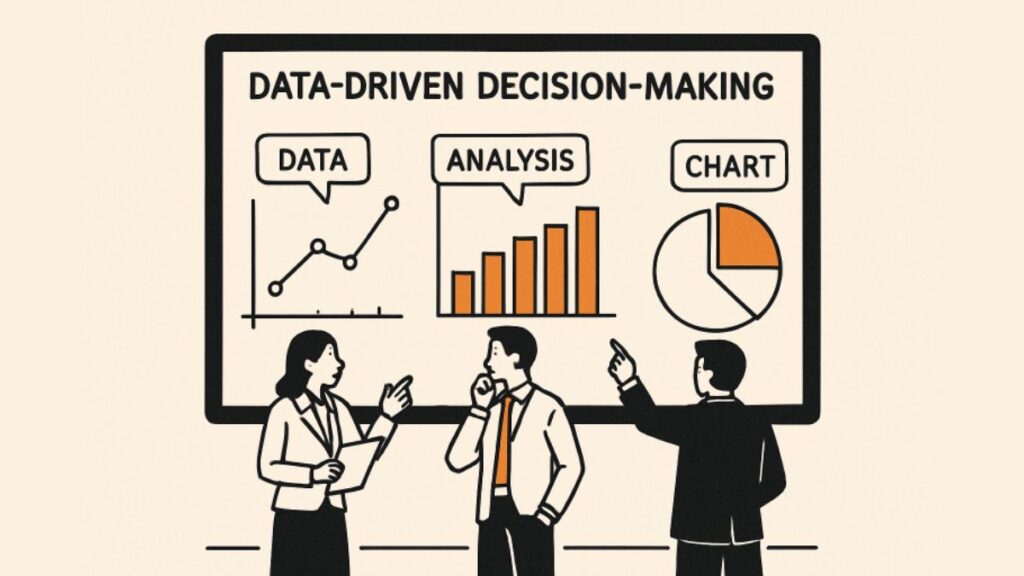
In today’s fiercely competitive and fast-changing market landscape, harnessing the full potential of data is no longer a luxury; it’s a necessity. Businesses that succeed in utilizing data-driven strategies position themselves for accelerated growth, higher profitability, and greater agility in responding to market shifts. Developing a comprehensive plan for revenue growth based on data analysis empowers organizations to make informed decisions and outpace competitors.
Statistics reveal a widening gap between data leaders and laggards. Companies that tap into actionable insights derived from analytics routinely outperform their peers in areas ranging from customer engagement to operational efficiency. By learning to interpret trends and anticipate needs through data, businesses can fine-tune every aspect of their operation for sustained financial success.
Understanding Data-Driven Strategies
At its core, a data-driven strategy means grounding business plans, actions, and growth initiatives in evidence gleaned from data analysis rather than intuition. This approach enables companies to recognize patterns, measure precise outcomes, and predict future scenarios. The result is a more agile approach to changing environments, where proactive adaptation replaces reactive guesswork.
For many organizations, moving from data collection to actionable insight is the leap that delivers true value. Data-driven enterprises rely not only on dashboards and reports but also on robust analytics pipelines that fuel innovation at every level, facilitating market segmentation, product development, sales optimization, and customer success.
Numerous research studies, including those by the Harvard Business Review, show that companies that embrace data-centric methodologies consistently achieve higher returns on investment and sustainable competitive advantages.
Optimizing Pricing with Data
Data analytics empowers businesses to unlock new revenue opportunities through strategic pricing. By analyzing transaction histories, customer segments, and real-time market conditions, companies can dynamically adjust pricing strategies for maximum profitability. Advanced pricing algorithms allow for automated testing and refinement of price points, revealing what customers are willing to pay without sacrificing competitive positioning.
A prime example is the dynamic pricing tactic employed by industry leaders like Amazon or Uber. These firms use predictive analytics to set flexible prices based on demand, time, seasonality, and competition, ensuring they capture the highest possible revenue during peak periods while remaining compelling during slowdowns.
Enhancing Marketing Campaigns
Marketing has evolved beyond large-scale, generic campaigns. Data analytics provides deep insights into customer needs, preferences, and behaviors, enabling fully personalized marketing experiences that resonate with specific audiences. With granular information about prior interactions, purchase histories, and feedback, marketers can tailor creative content, choose the optimal timing, and select the right channels to maximize campaign performance.
Driving Higher ROI Through Personalization
Personalized marketing strategies regularly achieve significant improvements in both engagement and return on investment. According to McKinsey & Company, organizations that harness the power of personalization achieve ROI up to 8 times higher than those that do not. Machine learning models drive these results by segmenting audiences and optimizing campaigns in near real-time.
Leveraging AI for Customer Insights
Artificial Intelligence (AI) and Machine Learning (ML) open up powerful avenues for understanding customer behavior. Through sophisticated algorithms, businesses can sift through massive volumes of transactional and behavioral data to reveal actionable patterns, forecast churn, and build targeted recommendations. The entertainment industry, for instance, relies on AI-driven analytics to curate customer experiences. Netflix, for example, uses machine learning to tailor its recommendations; 80% of the content watched comes from personalized suggestions, enhancing user satisfaction and loyalty while increasing subscription retention.
Streamlining Operations through Analytics
Data-driven analytics can have a transformative impact on a company’s internal operations, reducing costs and improving efficiency. Inventory management, logistics, and workforce planning benefit greatly from predictive analytics that anticipate demand surges and optimize resource allocation. By adopting just-in-time inventory systems, firms not only minimize holding costs but also reduce the risk of lost sales from stockouts.
Predicting and Responding to Trends
With advanced analytic tools, companies can monitor supply chain vulnerabilities, anticipate bottlenecks, and adjust processes swiftly. For instance, manufacturing enterprises that implement real-time analytics can react quickly to disruptions, minimizing downtime and waste directly boosting the bottom line.
Building a Data-Centric Culture
Adopting a data-centric culture involves more than tools and technology; it requires a mindset shift across all organizational levels. Leadership plays a crucial role in championing data-driven practices by setting clear expectations and investing in employee training. When data consistently support decision-making, organizations experience improved transparency, accountability, and performance.
According to Gartner research, companies where leadership strongly supports data initiatives are over 4 times as likely to make major strategic decisions grounded in data. Fostering collaboration and continuous improvement ensures the data-centric approach becomes embedded in company DNA.
Conclusion
Embracing data-driven revenue strategies puts your business on a path to higher profitability and long-term growth. Whether through pricing optimization, smarter marketing, AI-powered customer insights, operational improvements, or nurturing a data-centric culture, the impact of analytics is both immediate and enduring. Taking decisive action today to leverage data will future-proof your organization against disruption and put you ahead of the competition.