
Current State of the Housing Market
The U.S. housing market has experienced significant fluctuations over the past decade, with heightened volatility in recent years. As of late 2025, a gradual recovery is underway, as evidenced by a 1.8% monthly increase in new home sales for February. This momentum hints at increased activity for both buyers and builders in the coming year. While demand is rebounding, rising mortgage rates and broader economic uncertainty still temper buyer enthusiasm, making market navigation delicate for those looking to sell or purchase.
The role of dedicated real estate experts and organizations cannot be underestimated in this shifting environment. Firms such as New Home Star are at the forefront, offering guidance to builders and buyers alike through tumultuous changes and ensuring strategic decision-making in a competitive landscape.
This new landscape is shaped not only by direct economic markers but also by behavioral trends among first-time homebuyers and investors. Traditionally, challenging affordability has suppressed demand; however, gradually loosening lending environments and creative financial incentives have begun to encourage hesitant buyers to re-enter the market, further advancing the slow but steady uptick in new home sales.
Nonetheless, persistent inflation and high construction costs continue to challenge the profitability of builders and the affordability of many aspiring homeowners. The interplay between these challenges and a recovering demand base creates a complex backdrop for 2026, with the potential for continued modest improvements or renewed setbacks, depending on broader fiscal trends and policy decisions.
Projected Trends for 2026
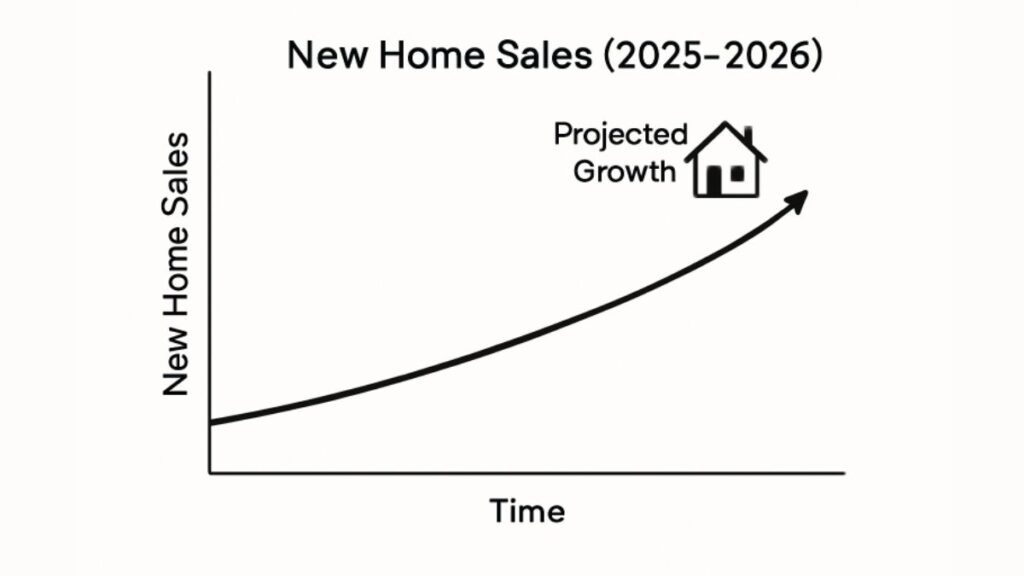
Looking ahead to 2026, market researchers and brokerage economists project a cautiously optimistic outlook. New home sales are anticipated to rise by 4.3%, buoyed by a predicted 1.2% increase in average home values. These forecasts are based on several core assumptions: an improving economic outlook, gradual moderation in mortgage interest rates, and pent-up demand from buyers previously sidelined by affordability challenges.
Industry experts concur that, although explosive growth is unlikely, 2026 should offer a more favorable and resilient housing environment compared to the past few years. Pent-up demand is poised to meet greater supply, but at a tempered, sustainable pace.
Factors Influencing New Home Sales
- Affordability Improvements: Builders are increasingly offering creative incentives—such as lower initial interest rates and down payment assistance programs—to help new buyers enter the market. These efforts are helping close the gap for buyers struggling with higher prices and borrowing costs.
- Inventory Levels: Builders have responded to prior supply shortages by increasing new construction, with more diverse inventory expected to hit the market through 2026. Greater choice tends to moderate price increases, allowing buyers to better match homes to their budgets and preferences.
- Economic Indicators: Consistent job growth and steady wage gains lend confidence to both established homeowners and first-time buyers. With broader economic sentiment remaining positive, the market is better positioned for gradual, extended gains rather than boom-and-bust cycles.
Regional Variations
Real estate remains deeply localized, and 2026 is expected to maintain stark contrasts between regions. For instance, metro Denver recently witnessed a sharp decline in home values, with an estimated 91% of properties losing value over the past 12 months. Yet, other metro areas—such as parts of the Southeast and Southwest—are seeing steadier growth, driven by inward migration, job creation, and stable local economies. Awareness of local factors remains integral for both buyers and sellers looking to maximize their opportunities and mitigate risk.
Regional insights can be found through authoritative resources, such as CBS News, which explores how shifting population trends and employment hubs are shaping local housing markets across the U.S.
Impact of Mortgage Rates
Mortgage rates have a profound influence on homebuying activity. Following a period of steep rate hikes in recent years, projections suggest that rates will stabilize, averaging around 6% in 2026, a slight dip from 2025’s 6.7% average. While these rates remain above historic lows, the slight decline may be sufficient to pull some would-be buyers off the sidelines, especially those who have been waiting for a marginally better deal on their borrowing costs.
For buyers, this means placing a greater emphasis on locking in rates when favorable terms are available, while making contingency plans for fluctuating borrowing costs. For builders, incorporating rate buydown incentives and tailored financing solutions has become a strategic necessity.
Builder Strategies and Incentives
- Price Reductions: Builders are increasingly lowering prices on select inventory, particularly on quick-move-in homes where carrying costs would otherwise erode their margins.
- Incentives, such as mortgage rate buydowns, closing cost assistance, and design center credits, are now commonly used to expand the buyer pool and expedite sales.
- Product Diversification: Builders are expanding their portfolios to include more entry-level options, townhomes, and flexible multi-use spaces, appealing to a broader audience and adapting to evolving buyer needs.
Challenges and Considerations
- Economic Uncertainty: Personal finance sentiment is still somewhat fragile. Geopolitical events, fluctuating inflation, and stock market corrections all pose risks that could quickly impact homebuyer confidence.
- Supply Chain Issues: While some material shortages have abated since the pandemic, ongoing disruptions in construction supply chains can still delay projects and drive costs higher.
- Regulatory Changes: Potential policy shifts at both the federal and local levels can impact lending standards, zoning, and development approval processes, introducing an unpredictable regulatory element into the homebuilding equation.
Conclusion
The outlook for 2026 suggests a housing market gaining strength, with new home sales projected to rise as affordability constraints ease and buyer demand recovers. Regional dynamics and economic conditions will drive divergent outcomes across the country, reinforcing the need for vigilant strategy and expert guidance. For builders and buyers alike, adaptability and market awareness remain the keys to success in a landscape defined by both ongoing challenges and emerging opportunities.