
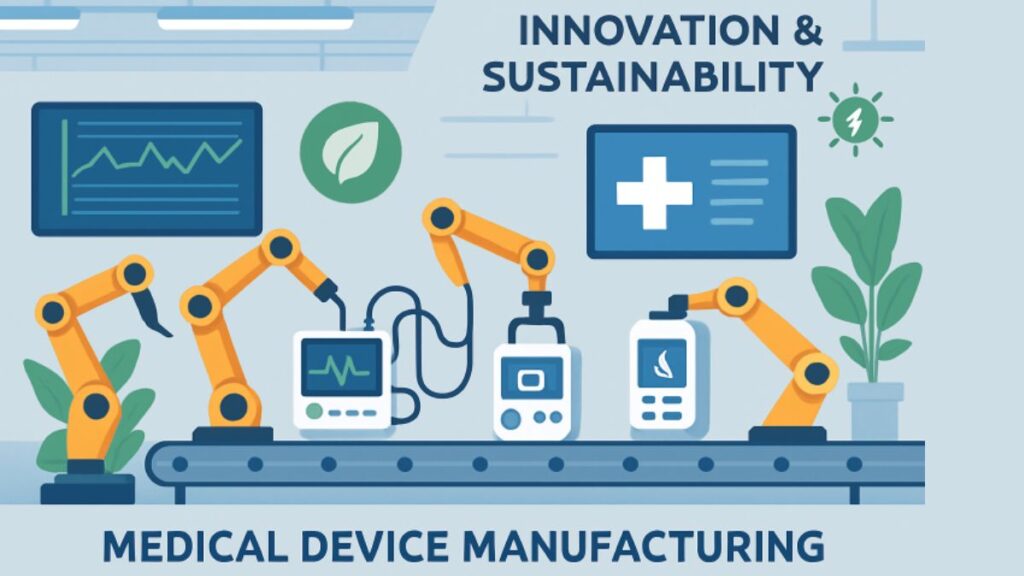
The medical device manufacturing landscape is evolving rapidly, powered by emerging technologies, heightened patient expectations, and shifting regulatory demands. Manufacturers are embracing digital transformation, sustainability, and new production methods to deliver better, safer products at scale. One critical strategy gaining traction in this rapidly evolving industry is contract manufacturing, which enables companies to leverage specialized expertise and global capabilities to accelerate innovation and market access.
From artificial intelligence (AI) to additive manufacturing, the latest trends are breaking traditional boundaries and redefining how devices are designed, produced, and brought to market. These changes are making patient care more personalized, efficient, and environmentally responsible, while manufacturers balance cost-effectiveness and strict regulatory compliance.
The adoption of novel production techniques, deeper data integration, and new business models underscores the sector’s commitment to advancing healthcare outcomes. Partnerships across the value chain, particularly with contract manufacturers, are driving these innovations, supporting both established medtech firms and nimble startups as they navigate the complexities of today’s marketplace.
As technology reshapes the competitive landscape, manufacturers must adapt quickly by embracing new tools and best practices to meet the needs of regulators, providers, and patients worldwide. With digital health booming and the era of precision medicine gaining momentum, the future of medical device manufacturing is more promising—and challenging—than ever before.
AI Integration in Manufacturing Processes
Artificial intelligence has emerged as a major force in medical device manufacturing. AI-driven tools can sift through immense datasets to optimize production, quickly identify defects, and predict equipment maintenance through real-time monitoring. A notable breakthrough is the use of advanced image analysis systems to inspect surgical instruments and device components, which significantly reduces manual inspection times and boosts accuracy. This trend not only improves product quality but also helps companies comply with increasingly stringent regulatory requirements. The adoption of AI-enabled quality control is becoming increasingly essential for manufacturers seeking to scale operations efficiently and minimize costly recalls or delays.
Advancements in 3D Printing and Additive Manufacturing
3D printing, also known as additive manufacturing, is unlocking new possibilities for highly personalized medical devices. Manufacturers can now produce implants, prosthetics, and surgical guides tailored to fit a patient’s unique anatomy with unparalleled precision. This technology minimizes waste and enables rapid prototyping, allowing for nearly instantaneous iteration and improvement. Complex components that once required intricate assembly can often be produced in a single manufacturing step, reducing costs and time-to-market. Research from Forbes highlights how 3D printing is enhancing both operational efficiency and patient care, especially as these devices move from research labs to routine clinical environments.
Embracing Sustainability and ESG Goals
With rising awareness of the environmental impact of healthcare, medtech companies are integrating sustainability and environmental, social, and governance (ESG) objectives into every stage of the product life cycle. Manufacturers are increasingly selecting bio-based and recyclable materials, employing clean energy sources for production, and developing devices with end-of-life recyclability in mind. Initiatives such as “Design for Sustainability” encourage innovative approaches, including reducing the size and complexity of devices, to minimize emissions and resource consumption. These shifts are not only fulfilling global regulatory mandates but also responding to the growing demand from healthcare systems and consumers for greener products. Continued progress in sustainable manufacturing aligns with broader industry trends toward circular economies and responsible sourcing.
Comprehensive Process Automation
Comprehensive automation is rapidly transforming device manufacturing, particularly as companies continue to face persistent labor shortages. Through the implementation of robotics, intelligent material handling, and advanced assembly systems, manufacturers can reduce manual intervention for repetitive or hazardous tasks. Automation leads to fewer human errors, enhanced production throughput, and improved traceability throughout the manufacturing process. Many companies are collaborating with automation specialists to develop custom systems tailored to their product lines, ensuring flexibility and future scalability. This shift also supports companies’ efforts to maintain compliance, particularly as regulatory bodies require increasingly detailed records of every process step.
Rise of Wearable and Biometric Devices
Wearable technology is gaining momentum in both clinical and consumer markets. From fitness monitors that track heart rate and activity to advanced medical-grade devices that manage chronic conditions, wearable devices are enabling patients and providers to access real-time health insights. The explosion of digital health devices is facilitating early diagnosis, remote patient monitoring, and even predictive care, thereby reducing the need for frequent hospital visits and improving overall health outcomes. Integration with AI analytics is empowering these devices to provide even deeper insights and more responsive care, a shift particularly visible during the global health crises of recent years.
Navigating Regulatory Challenges
Regulatory complexity in medical device manufacturing is intensifying. Evolving standards require manufacturers to establish robust quality management systems and meticulous documentation at every stage of the product lifecycle. Leveraging technology, particularly AI-based data management tools, enables teams to monitor compliance, forecast regulatory changes, and prevent costly mistakes. Companies that coordinate closely with regulatory bodies and implement proactive compliance strategies are positioned to accelerate approvals and streamline market entry. Emerging global regulations, such as those governing real-world data and software as a medical device (SaMD), necessitate constant vigilance and agile adaptation by manufacturers.
Trends in Outsourcing and Contract Manufacturing
Outsourcing manufacturing operations through contract partnerships is a prominent trend. By transferring production to specialized firms, device companies can leverage advanced technologies, scale quickly, and control costs without compromising quality. The growth of contract manufacturing is bolstered by increasing demand for speed and flexibility across product lines. Selecting the right contract manufacturer is crucial for maintaining regulatory compliance and ensuring end-to-end product traceability. As devices become increasingly complex, these partnerships enable medtech firms to access niche expertise and respond rapidly to changing market requirements.
Future Outlook
The future of medical device manufacturing will be defined by agility, collaboration, and technological leadership. Manufacturers that embrace data-driven innovation, automation, and sustainable practices are best equipped to navigate challenges and capitalize on new opportunities in the healthcare sector. As the regulatory landscape becomes increasingly demanding and global competition intensifies, continuous investment in advanced manufacturing and strategic partnerships will be crucial for sustained success and a positive patient impact.