
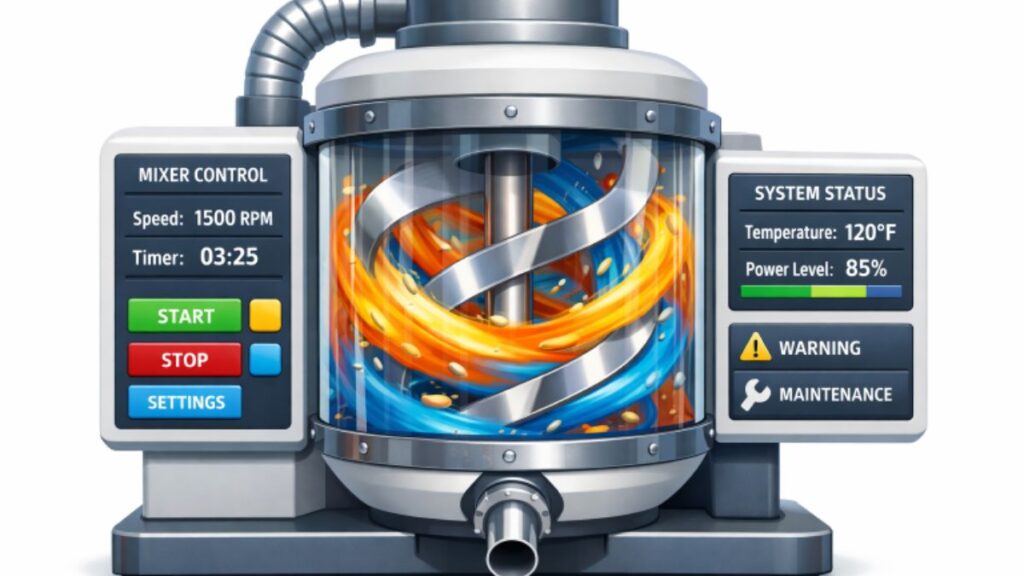
Industrial mixing technology is undergoing a paradigm shift as businesses across the food, chemical, pharmaceutical, and materials sectors strive for higher quality and greater efficiency. Manufacturers are increasingly seeking advanced systems that handle diverse materials, streamline production, and minimize environmental impact. For companies aiming for optimal process consistency, investing in industrial blenders and state-of-the-art mixer technologies is rapidly becoming the norm. These innovations address critical challenges, from energy consumption to achieving precise product uniformity in demanding operational environments.
As global industries become more interconnected and regulations grow stricter, the demand for reliable, high-performance mixing solutions has soared. Modern mixer designs must not only deliver consistent outputs but also reduce operating costs and provide flexibility for changing process parameters. The latest generation of industrial blending technologies adopts these requirements, helping manufacturers improve competitiveness in a fast-paced marketplace.
This rapid evolution means businesses must stay informed about both established and emerging trends within the domain. Advances in automation, machine learning, and adaptive process controls are impacting everything from small-batch specialty production to high-volume manufacturing and supply chain integration.
Advancements in Blade Design
At the heart of many breakthroughs in industrial mixing lies an emphasis on blade architecture. Traditional mixers, while effective for basic applications, struggle to achieve perfect uniformity, especially when handling high-viscosity slurries, complex granules, or sensitive compounds. Newer blade designs, such as patented 3D geometries, are engineered to promote both vertical and horizontal flow within the mixing vessel. This ensures better ingredient integration, rapid dispersion of additives, and uniform bulk movement. Ultimately, the result is a homogenous product in less time and with reduced energy requirements.
Continuous innovation in blade shapes also promotes easier cleaning and maintenance, reducing downtime and the risk of cross-contamination, key concerns in regulated industries. These latest blades are often constructed from highly durable materials that withstand aggressive cleaning protocols and abrasive mixes, improving lifecycle costs and reliability.
High-Intensity Mixing Systems
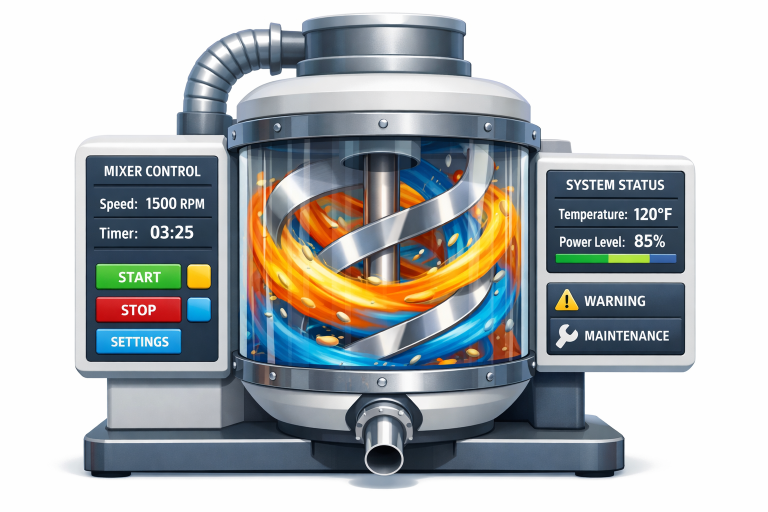
In sectors such as polymers, chemicals, and specialty materials, precision and consistency are non-negotiable. High-intensity mixing systems have become indispensable in these environments. They feature cutting-edge cooling elements and optimized mixing tool profiles. Such systems can maintain a stable temperature throughout the mixing cycle, preventing material degradation and ensuring even heat distribution. In the plastics and rubber industries, for instance, uniform temperature and shear rates reduce batch rejection rates and increase throughput.
High-intensity systems are also increasingly being developed with modularity in mind. Operators can now rapidly swap out mixing tools or adjust operating algorithms to accommodate new recipes or formulations, supporting product innovation and reducing time to market for new releases.
Integration of Smart Technologies
The digital revolution has reached industrial mixing as smart processes continue to gain traction. Sophisticated control panels, touch interfaces, and remote monitoring empower operators to make real-time adjustments for speed, temperature, and mixing duration. Automated reporting and data collection take quality assurance to the next level by allowing continuous process validation. These smart features not only minimize human error and waste but also enhance adaptability to changing input materials or recipes.
Intelligent diagnostics within mixer controls can now predict maintenance needs and alert operators to component wear or deviations from ideal operating parameters. This proactive maintenance reduces unexpected downtime, extends equipment life, and protects product quality, adding measurable value to modern manufacturing operations.
Energy Efficiency and Sustainability
As environmental stewardship becomes a business imperative, manufacturers are actively seeking ways to make their processes greener. Contemporary mixers are designed with energy efficiency in mind. High-torque motors, variable frequency drives, and efficient blade transmissions ensure that every kilowatt counts. Furthermore, the decreased cycle times and optimized mixing actions mean that less energy is consumed per batch. Innovations like these align with global best practices for sustainable manufacturing, reducing greenhouse gas emissions and lowering overall carbon footprints.
Forward-thinking companies are exploring integrating renewable energy sources, closed-loop water cooling, and recyclable construction materials into mixer systems to reduce their environmental impact further. Reducing reliance on non-renewable resources not only supports sustainability targets but can also provide financial benefits through utility savings and regulatory incentives.
Customization and Scalability
Today’s mixing technologies are not only smarter but also more customizable and scalable. Mixing equipment providers offer solutions tailored to specific product types, viscosity ranges, and processing capacities. This flexibility is crucial for companies that may need to pivot between products or ramp up production to meet sudden demand spikes. Lab-scale mixers for research and pilot runs can be easily scaled up to industrial systems, ensuring process continuity from development through full-scale manufacturing.
Beyond standard configurations, companies are increasingly requesting the integration of automation with broader plant-level systems. This connectivity enables seamless material handling, recipe management, and production scheduling, optimizing factory throughput and traceability from raw material delivery through final packaging.
Industry Adoption and Future Trends
With these advancements, industries are quickly adopting next-generation mixing solutions to stay at the forefront of their markets. The transition is especially pronounced in regulated sectors where product traceability, batch consistency, and contamination control are mandatory. Looking ahead, trends suggest even deeper integration of artificial intelligence for predictive maintenance and recipe optimization. Vision systems may soon monitor color, texture, and flow in real time, providing feedback for automated process corrections. Additionally, we can anticipate more innovation around sustainable materials, recycling, and closed-loop manufacturing systems that reduce waste even further.
The future will likely see new collaborative partnerships between equipment manufacturers and their customers to co-develop mixing solutions suited to rapidly changing market needs. Continuous R&D will ensure that mixing equipment remains adaptable to emerging raw materials, green chemistries, and evolving consumer preferences.
Conclusion
As industrial manufacturing evolves, the demand for dependable, efficient, and sustainable mixing technology will only grow. The latest innovations, from advanced blade design to digital automation, are setting new standards for performance, safety, and scalability. By choosing the right mixing solutions, businesses can ensure superior quality, faster production cycles, and a reduced environmental footprint, positioning themselves for sustained growth in a competitive global economy.
To remain competitive, organizations should actively monitor technological breakthroughs in mixing and blending. Embracing a continuous improvement mindset will help companies maximize their return on investment in advanced mixing equipment while delivering top-quality products that meet both regulatory and consumer expectations.